Showing posts with label Western. Show all posts

Sunday, April 3, 2011

Art comparison


It's quite obvious that the designer of this cover for a omnibus edition of Meg Cabot's Mediator series was very fond of The girl with the dragon tattoo.


I'm very likely way off with my assessment, but if asked, I would say we are looking at the work of the same design team here.


Yeah, yeah ... filling space by pointing out the obvious. Sue me.

Saturday, September 4, 2010

Picture perfect moment


Above we see we a crucified Keoma being shown his father's dead body, one of the great ironic images that make up the same titled movie. “God is dead” is a recurring message throughout the Italian western cycle, one doubtlessly rooted in Italian’s strict catholic upbringing, but no other movie made as unashamed, nor stylistically as brilliant, a use of this as Enzo G. Castellari‘s Keoma. Essentially the whole movie seems to have been made with the one idea in mind to capture the essential myths that make up this particular genre in a row of iconic sequences so loosely connected by story that it needs a commenting narrative as movie score.
Castellari would later go and restage various parts of this famous movie for another of his ventures*, for example the iconic crucifixion, but he never again achieved the same cinematographic perfection we find in Keoma.

*Jonathan degli orsi (Jonathan of the bears)

Sunday, April 25, 2010

Bande Dessinée


I'm always getting a nervous itch when an American director tries his hand at an established piece of European culture.
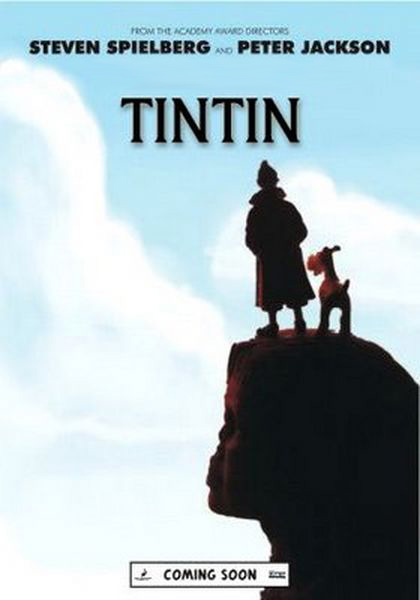
So with the threat of Spielberg’s version of Tintin looming ahead, let’s cast a glance at how the French* fared in their own treatment of their comic-art heritage:

Blueberry is a highly successful Wild-West comic that comes in different cycles: Lt. Blueberry, Marshall Blueberry, Mr. Blueberry and Young Blueberry (for a timetable see here: Click). The movie Blueberry is a very loose adaptation of the comic, that after a promising start which reminds us that Europe once had a thriving Western movie industry, slowly succumbs to a convoluted new-age mystery plot. At the end there’s so few left of the original figure that one can only assume that all the makers were interested in was a popular name to tag on a otherwise completely mediocre story.


Working our way up from there we meet another French comic institution, Michel Vaillant.
A surprisingly entertaining, more faithful movie than Blueberry. There are times when the makers sacrifice realism in order to give their character a bigger than life appearance but nothing that would seriously hurt the story flow. My only real gripe with the movie was the drastic changes made to the character of Julie Wood, a fairly prominent secondary figure from the comic strip.


Going up in time and quality we come to Largo Winch. A fine example of how action movies have to be constructed. We get a continuous build-up of suspense and a story that gains both speed and depth over its runtime, right up to the not completely surprising but logical conclusion.
Largo Winch is a highly welcome deviation from the Bay school of movie making that doesn't simply rely on throwing money at something but actually builds on characterization.

To be counted as best comic to movie adaptation is most likely Les chevaliers du ciel, the movie by Taxi director Gérard Pirès is in all but name a mostly faithful take on the popular military adventure comic series Les aventures de Tanguy et Laverdure.

The fact that it doesn't say at any point that it is related, grants the movie a right to take liberties with its heroes that others can not claim. It is exactly this freedom that makes Les chavaliers shine where other comic to movie projects are most often bound to disappoint.


Finally we come to what looks already most promising to me, and by far outshining the mystery adventure comic title it was adapted from:
Luc Besson’s Les aventures extraordinaires d'Adèle Blanc-Sec.
The comic strips alwas looked to be a tad on bland side, but much the same can be said about Tintin's ligne claire style, and you simply have to love that poster. *Le sigh*
Besides, with Luc Besson we have a director at the helm that I'm bound to put much more trust on than I do on either Spielberg or Jackson.


We have to see how Tintin will play out, but it is always daring to try to adapt European comics which other than their American brethren tend to follow a more strict characterization. It's not like in the Superhero market which sees a new version for each new decade, or much rather every year by now, complete with "earth shattering" changes that will only last to the next re-launch, if that long...
European comic book characters evolve over time, they grow in character, they age, they ain't caught in an unfortunate, perpetual state of limbo that occasionally calls for plot twists which make Bobby Ewing's infamous return from the dead pale in comparison.
Franco/Belgian comics are grown up entertainment for grown-ups and kids alike, without having to resort to sex and senseless violence in order to appear adult.


*I know, I know, Tintin is actually Belgian, but that’s much the same market, if not he same style.

Saturday, April 10, 2010

Art comparison


Probably non intentional...


Killer Sharing


Bad Boys ... Bad Girls

Wednesday, February 3, 2010

Of Human Bondage


Picking up on a (here in my place) common theme, it's bound to scare you actually how easily we are catering to fantasies of domination over women and sexual abuse. I wonder if people would treat it just as lightly if we were to use pictures of sexualized violence and humiliation aginst men with the same casual frequency and with the same easy connoction of it qualifiying as "entertainment":


Wednesday, January 13, 2010

Erotic Art - Girls and Guns


With a title like that it would be easy to simply go and post the entirety of Bond posters. I hope you don't mind me opening with one:
The Living Daylights, actually managed to replace an old favourite of mine among the Bond posters, and the movies, namely the iconic For your eyes only (I'm pretty sure I'll find an excuse to post that later on).


Girls and Guns, this is a staple in erotic art with a connection between the two of them almost as immediate as the popular Death & Eros image often used with Horror movies.


To include Ms. 45, after what I said about putting up Irreversible in a Erotic Movie Posters top list, must seem a odd decision and I feel that I have to make excuses for that. Well, I can only say this in my defence that I never actually saw the movie in question.

Thursday, September 3, 2009

Picture perfect moment


When Sergio Corbucci was asked what he thought about the political messages some of his colleagues had in their movies he said that “there is nothing political about the Italian Western”, yet one can’t help but wonder about his sincerity when watching Django with the ‘Colonel’ and his henchmen looking suspiciously like fascists.
Corbucci himself says about the mask they wear that Django had such a late casting that he only got the leftovers as supporting cast, men so hideous he had to hide their faces.
And maybe that is all there is to it, and we just happen to see the veiled political statement that we want to. Because one thing is for sure, Corbucci had never much use for subtlety in his movies.


Enzo G. Castellari was Italy’s Sam Peckinpah. A fact that can be best observed in Keoma, here he took his death ballet approach the farthest and combines it with a rough driving score that narrates the movie and gives it a very literal Horse Opera feeling.
He uses a refined style over story approach with this movie, which is not to say that the movie doesn’t have a story, it just takes a far second place with primary attention put on carefully choreographed violence and Castellari’s inventive use of camera.

Both in their personal ways explored and defined the borders of the Italian Western myths, with Corbucci putting the focus on defining the characters and ultimately succeeding in reducing them to their essentials in Il Grande Silenzio and Castellari showing a clear preference for style and iconography. Castellari never managed to put forward a equally defining work as Corbucci but he got close with Keoma, which while being far from polished makes for a perfect style study.